

Every manufacturing facility depends on equipment that performs accurately and consistently. Whether your team is inspecting machined components, checking torque specifications, or monitoring production temperatures, reliable measurements help keep operations moving and products within specification. However, sending essential instruments to an outside calibration laboratory can complicate scheduling, particularly when those tools are needed for daily production. For manufacturers in Carol Stream, IL, on-site calibration offers an alternative that can help reduce equipment transportation and make routine calibration easier to coordinate.
On-site calibration allows qualified technicians to perform eligible instrument calibration at a customer’s facility rather than requiring every device to be shipped or delivered to a laboratory. This approach can help manufacturers coordinate calibration with production schedules, reduce transportation requirements, and keep certain instruments closer to their point of use. However, equipment still needs to be made available for testing, and some instruments require laboratory-controlled conditions. The best approach depends on the instrument, required accuracy, environmental conditions, and applicable quality requirements.
For facilities evaluating on-site calibration services in Carol Stream, IL, several considerations are particularly important:
- Reduced transportation requirements: Manufacturers can avoid shipping certain heavy, delicate, or frequently used instruments to an outside laboratory.
- More flexible scheduling: Facilities in Carol Stream, Glendale Heights, and Bloomingdale can coordinate eligible calibration work with planned maintenance or production breaks.
- Equipment-specific capabilities: Not every instrument qualifies for field calibration testing, so the equipment list and technical requirements should be reviewed before scheduling.
- Reliable measurement documentation: Calibration records help quality teams track instrument performance, measurement traceability, and applicable compliance requirements.
- Better maintenance planning: Organizing calibration in advance can reduce preventable scheduling conflicts and help facilities manage equipment availability.
At Nationwide Gage Calibration, also known as NATCAL, we’ve helped manufacturers maintain accurate measurement equipment since 1984. Our calibration laboratory is located in Carol Stream, and we provide both laboratory and on-site calibration services for eligible industrial instruments. Our ANAB-accredited capabilities support organizations that require documented measurement accuracy, including manufacturers working under demanding quality systems. We work with customers to evaluate their equipment, coordinate appropriate service arrangements, and provide calibration documentation that supports their operational requirements.
What Is On-Site Calibration and How Does It Work?
On-site calibration is the process of testing and calibrating eligible measurement instruments at the facility where they are used. Rather than transporting equipment to a calibration laboratory, a technician brings appropriate reference standards and testing equipment to the customer’s location, performs the required measurements, and documents the results.
Bringing Calibration Services to the Production Facility
Traditional laboratory calibration requires instruments to be removed from their normal location and transported to a controlled testing environment. This approach remains appropriate for many instruments, particularly those requiring specialized equipment or tightly controlled conditions.
An on-site calibration service provides another option when the instrument can be accurately evaluated at the customer’s facility.
We review the equipment list, required measurement parameters, and technical specifications before determining which instruments qualify. This preparation helps establish whether the requested work can be completed at the facility or should be performed in our laboratory.
What Happens During an On-Site Visit?
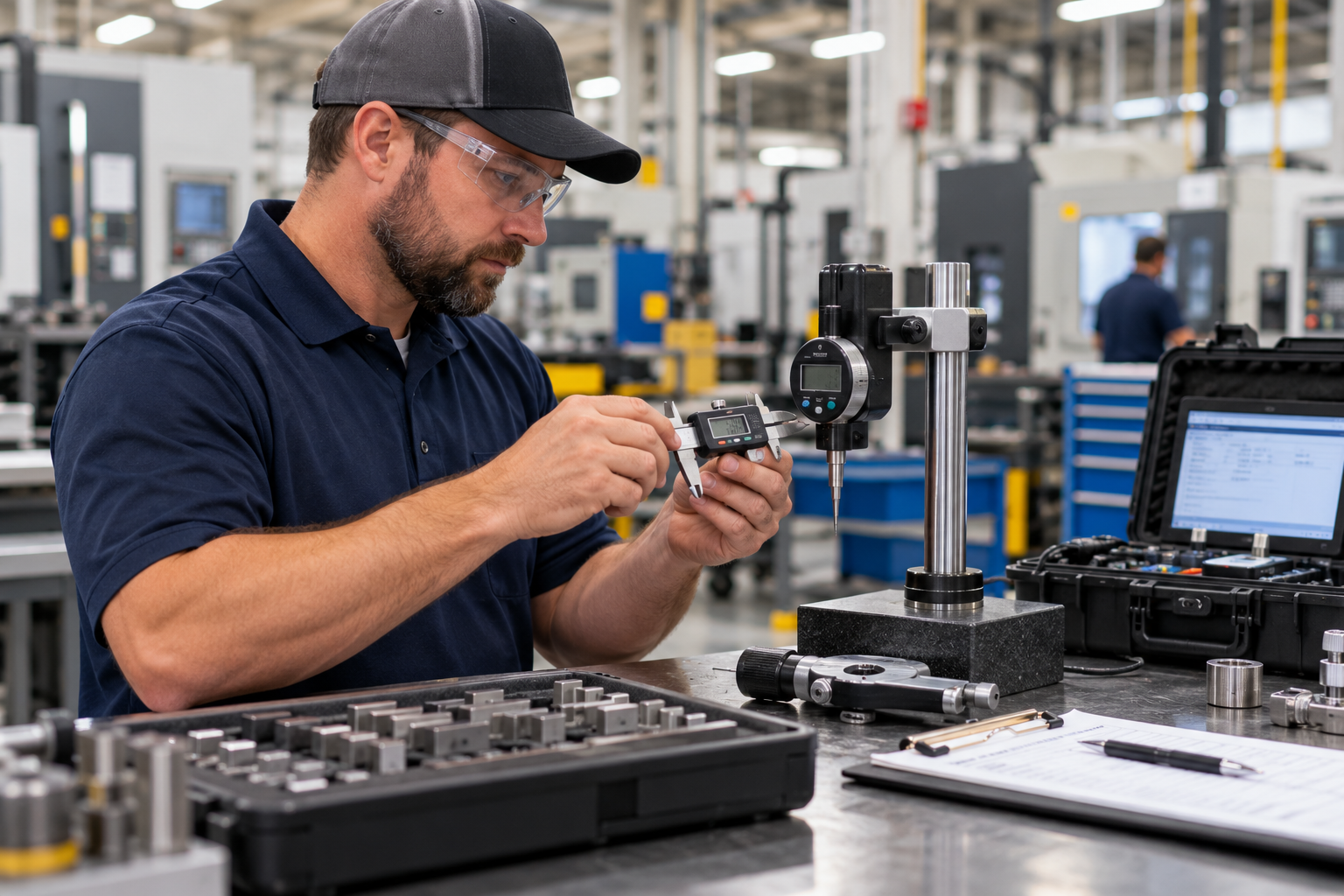
A typical on-site calibration visit begins with confirming the instruments requiring service and the testing conditions available. Technicians then perform the applicable calibration procedures using appropriate reference standards.
Individual instruments generally must be available and taken out of normal use during their calibration. Depending on the equipment, the process may also involve adjustments, additional measurements, or recommendations for further evaluation.
After testing, we provide documentation identifying the serviced equipment and applicable measurement results. This information helps facilities maintain calibration records and determine whether instruments remain suitable for their intended applications.
How Can On-Site Calibration Help Reduce Production Disruptions?
On-site calibration can help reduce production disruptions by eliminating certain equipment shipping requirements and allowing calibration activities to be coordinated with existing facility schedules. Although it doesn’t guarantee uninterrupted production, it gives maintenance and quality teams another way to organize essential measurement services.
Less Time Spent Transporting Equipment
Removing an instrument from a production facility can involve more than simply placing it in a shipping container. Employees may need to disconnect equipment, prepare documentation, arrange transportation, and coordinate its return.
For large or permanently installed instruments, these steps can become especially complicated.
Mobile calibration services may reduce some of these logistical demands by bringing testing resources directly to the facility. This can be valuable for manufacturers in DuPage County managing equipment that is difficult to move or frequently needed for inspection.
Coordinate Calibration With Planned Maintenance
Many manufacturing facilities already schedule equipment inspections, preventive maintenance, and production changeovers. Integrating calibration into these existing activities can help reduce unnecessary scheduling conflicts.
For example, a Carol Stream manufacturer might arrange calibration of eligible measurement tools during a planned maintenance window. Other departments could continue their normal activities if the affected equipment isn’t required for those operations.
However, individual instruments must still be removed from normal use while calibration is performed. We work with customers to discuss realistic scheduling arrangements rather than promising that production will never be interrupted.
Organize Multiple Instruments During One Visit
Facilities often maintain numerous instruments across production, maintenance, engineering, and quality assurance departments. Sending these devices to an outside laboratory at different times can create administrative and logistical challenges.
An organized in-plant calibration visit may allow several eligible instruments to be serviced during a coordinated appointment.
We can review equipment inventories and discuss whether grouping instruments makes sense for the facility. The final schedule depends on the number of devices, required procedures, technician availability, and testing conditions.
Which Production Instruments Can Be Calibrated On-Site?
Production instruments that may qualify for on-site calibration include certain torque tools, pressure gauges, temperature instruments, weighing equipment, and dimensional measuring devices. Eligibility depends on the required measurement uncertainty, the instrument’s specifications, and whether appropriate testing conditions can be established at the customer’s facility.
Torque and Pressure Measurement Equipment
Torque tools are commonly used in automotive assembly, equipment manufacturing, and other processes involving specified fastening requirements. Maintaining accurate torque measurements helps manufacturers evaluate whether assembly tools are operating within established tolerances.
Our calibration capabilities include torque wrenches, torque tools, pressure gauges, and related pressure instruments.
These services may be appropriate for qualifying on-site work when the necessary standards and conditions are available. We review the equipment details to confirm the calibration method and location before scheduling.
Temperature and Weighing Instruments
Temperature instruments support many industrial processes, including material treatment, environmental monitoring, and quality testing. Scales and other weighing equipment may be used for material preparation, product inspection, or manufacturing operations.
Our capabilities include applicable thermometers, temperature instruments, scales, and weighing devices.
Some equipment can be calibrated effectively in the plant, while other instruments may require laboratory-controlled conditions. We evaluate the measurement requirements before recommending either approach.
Dimensional and Inspection Equipment
Precision manufacturing depends on dimensional measurements taken with gages and other inspection instruments. Inaccurate equipment can affect product acceptance decisions, even when the production machinery itself is functioning properly.
Our services include calibration for applicable dimensional instruments, thread gages, gage blocks, and certain optical inspection systems.
Not every device can be calibrated on-site, particularly when environmental stability or specialized equipment is necessary. We help customers identify which instruments are appropriate for field service and which should be handled in our Carol Stream laboratory.
Why Does Calibration Matter for Manufacturing Quality Control?
Calibration matters for manufacturing quality control because inspection and production decisions depend on instruments that provide trustworthy measurement results. When equipment drifts outside acceptable limits, facilities may unknowingly accept nonconforming products, reject acceptable parts, or make process adjustments based on inaccurate information.
Supporting Consistent Product Measurements
Quality teams rely on calibrated instruments to compare actual measurements against specified requirements. These measurements may involve dimensions, pressure, temperature, torque, or other characteristics important to the finished product.
When instruments are operating outside their intended tolerances, those comparisons become less dependable.
Professional calibration helps identify measurement deviations and provides information about the instrument’s performance. Facilities can then determine whether adjustment, repair, replacement, or additional quality review is necessary.
Understanding Calibration Versus Equipment Verification
Calibration and verification are related activities, but they aren’t always interchangeable. Calibration establishes the relationship between an instrument’s indications and appropriate reference values, while verification determines whether specified requirements have been satisfied.
An instrument may be calibrated and still fail the facility’s acceptance criteria.
This distinction is important for manufacturers operating under documented quality systems. We provide calibration results that customers can use alongside their own procedures and acceptance requirements to determine whether equipment remains suitable for service.
Maintaining Appropriate Documentation
Calibration documentation helps quality managers track instrument identification, testing results, applicable reference standards, and service dates. These records may support internal reviews, customer audits, and other quality management activities.
Our accredited calibration services follow documented procedures and use traceable standards where applicable.
However, accreditation doesn’t automatically mean every service satisfies every customer’s requirements. Facilities should confirm that the specific calibration method, scope, uncertainty, and documentation meet their applicable standards before scheduling.
When Is Laboratory Calibration Better Than In-Plant Calibration?
Laboratory calibration is often preferable when instruments require tightly controlled environmental conditions, specialized reference equipment, or measurement capabilities that cannot be reproduced at the customer’s facility. On-site calibration is valuable, but it shouldn’t be treated as a universal replacement for laboratory service.
Environmental Conditions Can Affect Accuracy
Temperature, humidity, vibration, cleanliness, and other environmental conditions can influence measurement results. Precision instruments may require more stable surroundings than those available on an active production floor.
This consideration is particularly relevant for facilities performing highly sensitive dimensional measurements.
Northern Illinois also experiences substantial seasonal temperature changes, which can affect facility conditions during different parts of the year. Before performing field calibration testing, we review the environment and determine whether it supports the required measurement procedure.
Some Instruments Need Specialized Laboratory Equipment
Certain measurement devices require reference standards or testing systems that aren’t practical to transport. Others need more demanding measurement capabilities than those available through on-site service.
Our Carol Stream laboratory provides a controlled environment for qualifying instruments that need specialized attention.
We recommend the service location based on the equipment’s requirements rather than assuming one option is always preferable. This helps facilities select an approach that supports measurement accuracy and practical operating needs.
A Combined Approach May Work Best
Some manufacturers benefit from using both laboratory and on-site calibration services. Frequently used or difficult-to-transport instruments may qualify for in-plant service, while other devices can be scheduled for laboratory testing.
This approach gives quality teams flexibility without compromising technical requirements.
We provide both service options and can help facilities evaluate their inventories accordingly. A coordinated program may simplify administration while preserving the appropriate calibration process for each instrument.
How Can Facilities Build a More Efficient Calibration Schedule?
Facilities can build a more efficient calibration schedule by maintaining an accurate instrument inventory, identifying calibration requirements, and coordinating service dates with production and maintenance activities. A planned approach makes it easier to track due dates and avoid discovering overdue instruments during an audit or production run.
Start With an Accurate Equipment Inventory
An effective calibration program begins with knowing which instruments are being used and what measurements they support. Each controlled instrument should have an appropriate identifier, calibration history, and defined service requirements.
Useful information to organize includes:
- Instrument identification and location.
- Manufacturer and model information.
- Measurement ranges and required tolerances.
- Current calibration status and due date.
- Applicable quality or customer requirements.
- Whether the equipment can be removed for laboratory service.
- Environmental or access considerations for on-site testing.
This information helps determine which instruments could be grouped into a coordinated service visit. It also makes it easier to identify devices that require a different calibration approach.
Establish Appropriate Calibration Intervals
Not every instrument requires the same calibration frequency. The appropriate interval depends on equipment stability, frequency of use, environmental exposure, manufacturer recommendations, and applicable quality requirements.
A heavily used production instrument may require a different schedule from a measurement device used occasionally for reference checks.
Our recalibration reminder services can help customers keep track of upcoming due dates. However, each facility remains responsible for establishing intervals consistent with its own quality system and operational requirements.
Coordinate With Maintenance and Production Teams
Calibration scheduling works best when quality, maintenance, and production personnel communicate before appointments are finalized. Departments should identify when instruments can be made available and whether equipment must be disconnected or removed from service.
For manufacturers in Carol Stream, Wheaton, West Chicago, and neighboring communities, this planning can be especially useful during periods of high production demand.
We encourage customers to provide complete equipment lists and relevant operating constraints before scheduling. Accurate information helps us evaluate the work and discuss a practical service arrangement.
How Can NATCAL Support On-Site Calibration for Carol Stream Manufacturers?
NATCAL supports Carol Stream manufacturers through eligible on-site calibration, laboratory services, equipment repair, and documented measurement support. Our approach is designed to help quality and production teams maintain accurate instruments while considering practical scheduling and equipment accessibility requirements.
Accredited Calibration Expertise
Our laboratory has served Illinois manufacturers since 1984, providing more than 40 years of calibration experience. We maintain ANAB accreditation under ISO/IEC 17025:2017, with applicable accredited capabilities for on-site calibration.
Our procedures emphasize measurement traceability, technical accuracy, and consistent documentation.
The applicable accredited scope must be reviewed for each instrument and measurement parameter. We can help customers determine whether their requested service falls within our current capabilities.
Local Support for Chicago-Area Manufacturing
Our facility is located at 135 E. St. Charles Road, Suite E, in Carol Stream, IL. This location supports our work with manufacturers and industrial facilities throughout DuPage County and the surrounding Chicago-area market.
We provide on-site service for qualifying instruments when the required technical conditions and scheduling arrangements can be met.
Whether a facility operates in Addison, Glendale Heights, Bloomingdale, or elsewhere in Northern Illinois, our team can discuss appropriate service options. We also support laboratory calibration for instruments better suited to controlled testing conditions.
Practical Calibration Planning
We understand that manufacturers must balance equipment availability with quality requirements. Our goal is to help customers organize calibration work without introducing unnecessary logistical complications.
By reviewing equipment inventories, service specifications, and documentation needs beforehand, we can recommend an appropriate calibration approach.
We also provide calibration records and recalibration reminders that can support ongoing equipment management. These services help facilities maintain a more organized measurement program over time.
Frequently Asked Questions About On-Site Calibration Services
What is the main benefit of on-site calibration?
The main benefit of on-site calibration is the ability to test eligible instruments at the facility where they are used. This can reduce transportation requirements and make scheduling easier for certain production operations. However, individual instruments still need to be available for testing, and some equipment requires laboratory calibration.
Does Nationwide Gage Calibration provide on-site service in Carol Stream, IL?
Yes, we provide on-site calibration for qualifying instruments in Carol Stream and surrounding Chicago-area communities. Our services include applicable dimensional, torque, pressure, temperature, and weighing instruments. We review equipment specifications and testing requirements before confirming whether a particular device can be calibrated at the customer’s facility.
Can calibration be completed without stopping production?
Some facilities can continue unrelated operations while individual instruments are being calibrated. However, equipment undergoing calibration generally must be removed from normal use for the required testing. We work with customers to coordinate service around production schedules, but uninterrupted operation cannot be guaranteed.
Is on-site calibration as accurate as laboratory calibration?
On-site calibration can provide reliable results when the appropriate equipment, standards, procedures, and environmental conditions are available. However, measurement uncertainty may differ from laboratory conditions, particularly for sensitive instruments. Our accredited scope and the customer’s required tolerances help determine whether on-site service is appropriate.
What types of instruments can be calibrated at a manufacturing facility?
Eligible instruments may include torque tools, pressure gauges, thermometers, scales, dimensional measuring equipment, and certain inspection systems. The specific capabilities depend on measurement ranges, accuracy requirements, and environmental conditions. We review each equipment list to determine which items qualify for on-site calibration.
Can on-site calibration support ISO quality requirements?
On-site calibration can support quality requirements when the service, measurement uncertainty, documentation, and applicable accreditation scope meet the organization’s needs. However, receiving accredited calibration doesn’t automatically satisfy every customer or regulatory standard. Quality managers should confirm the relevant requirements before approving the service.
How often should production equipment be calibrated in Carol Stream?
Calibration frequency depends on the instrument, its use, historical stability, environmental exposure, and applicable quality requirements. Some equipment may follow annual schedules, while other instruments require more frequent or less frequent testing. We provide recalibration reminders to help facilities maintain their established schedules.
What happens if an instrument fails calibration?
An instrument that produces out-of-tolerance results may require adjustment, repair, or replacement. The facility may also need to evaluate whether previous measurements or product acceptance decisions were affected. We provide calibration documentation and can discuss applicable repair or additional service options.
Keep Your Measurement Program Accurate and Your Production Plans Organized
On-site calibration can be a practical solution for manufacturers that depend on accurate measurement equipment and want to reduce unnecessary transportation or scheduling complications. By bringing qualified technicians and appropriate testing equipment to the facility, eligible instruments can be calibrated closer to where they’re used. However, successful calibration still depends on technical requirements, environmental conditions, and the availability of each instrument for testing. Facilities benefit most when on-site and laboratory services are selected according to the actual needs of their measurement equipment.
At Nationwide Gage Calibration, we combine more than 40 years of industry experience with accredited laboratory capabilities and on-site service options for qualifying instruments. Our Carol Stream location allows us to work with manufacturers throughout DuPage County, the greater Chicago area, and other Northern Illinois communities. We understand the importance of dependable measurements, organized documentation, and practical scheduling for production and quality teams. Whether you’re coordinating a large equipment inventory, preparing for an audit, or evaluating mobile calibration services, we’re here to help you identify an appropriate approach.
Schedule On-Site Calibration Services in Carol Stream, IL
If your facility needs professional calibration but transporting essential equipment creates scheduling challenges, contact Nationwide Gage Calibration to discuss your requirements. We can review your instrument list, required tolerances, documentation needs, and facility conditions to determine which services are appropriate for on-site testing.
Contact us online or call (630) 529-4959 to request a free estimate or discuss an upcoming calibration project. We’ll help you evaluate available laboratory and field calibration options so your team can plan necessary service while supporting production schedules and quality requirements.